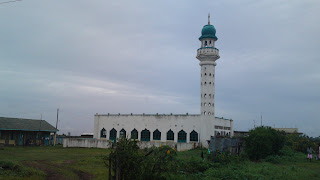
Saturday, January 02, 2010

Seen in Kenya

Cloud-covered Mt Kirinyaga seen from a maize farm


Which city please?


Boat from or going fishing...


In case you don't know your Alliance from your Baobob


Boarding the awesome Likoni ferry


Your attention is drawn to the miraa base...


mia


Mombasa seen from the air


Waiting to board fly540.com
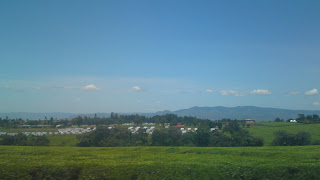


Tea farm, Kericho. Farm workers' houses in mid-ground


Kericho town


Kapsoit Junior, Kericho.


Sun setting over Kopere hills


Road to Oneno-nam Primary school


Tangy mangoes in Songhor


Maize, sugar farm near Kopere hills


Sugar harvesting


Chemelil Sugar factory


Sugar fields. Kopere and Songhor hills in the back ground


Sugar on its way to Chemelil Sugar



Turning at Awasi. A much better road


Nyando river


Rice field in Ahero


Some of the lakeside eateries. A mbuta with kuon will set you back Ksh850


The former Lake Victoria now disappearing under hycanith


K-city


...more K-city


I hadn't realised Cittihopa operates outside Nai


Kondele
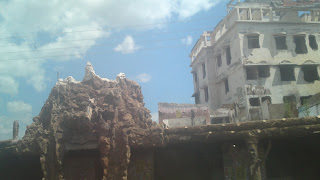


A K-city momento from PEV


Approach to K-city and Lake Victoria


One of the many large rock phenomena found in Western province. Missed the crying stones though.


... great use of the same by OMO


Another river. Whose name I've forgotten...


Kakamega


Sunday worship. Malava-style


Sugarcane transporter. The faster truck/lorry carrier is yet to be introduced.


The unslick road to Kakamega


Sugar growing in Webuye. Mt Elgon is in the background


Livonda winter resort...


The shut Panpaper needs to urgently re-open. It employs 35,000 directly and 80,000 indirectly in Webuye.


Turbo- on market day


Some river-whose name I've forgotten


Sirikiwa, the hometown of the noisy Ruto, only place a noticed had more grasshuts than mabati houses


Eld has grown fast since I was there some 7 years ago


Heavy traffic in Eld.


At least you can't miss the sign-post


Turning to m-o-1 university


Burnt Forest. Notice the charred remains of one of its tallest buildings.


Maize ready for harvest


The rolling valleys of Londiani


The bane of every driver. 1kph trailers


For some, PEV is still a reality. IDPs still waiting to be settled.


Mau Summit. Notice the obiqitous Safcom mass


Rolling plains of Molo


Sachngwan memorial


Uber-slick approach road to Nakuru town centre



The fast disappearing Lake Elementaita


...same lake from another view


Delamere farm with antelopes. While we are fighting over 2 acre holdings, this dude owns land stretching some 10km!


Early commuters on the slick Naivasha/Nakuru road


Beautifully green Mathira


Army training camp. Ngong hills in the background with the KenGen wind mills


Jumuia is a nice place to take kids for the day


Another new university


I like a CBD with trees


Ikotoilet is the latest scheme to fund public facilities. Fast-growing Tuskys in the background.


Kenyatta avenue on boxing day.


Ngong town. Note the "I am a memba" ad-board in the background


Edge of Ngong forest, Maasai teenagers in the mid-ground


Zebras at Solio Ranch


...and buffalos


The fast growing Naromoru has even attracted a sizeable Muslim population


Mt Kirinyaga covered in cloud, Kibaki's farm in the foreground


Friday, January 01, 2010

Re-commendations....

  1. Thank you God for the rains and a fast recovering economy in 2010
  2. Africa Alliance: For outstanding brokerage service. You see, being a broker is simply about taking an stock/bond buy or sell order and executing at specified price. And offcourse making sure clients get a feeling that you can take care of their funds. AA does this very well.
  3. Mwai "Roads" Kibaki: Credit where its due. With the exception of the Nai and its environs; the Kakamega to Kisumu and Nyahururu to Nyeri roads; you can now fly to your destination on very good bits of road building. The 8-lane Thika Road, will not resolve the massive jams caused by the fast growing real estate and car consumption from Central, though. Kibaki is no leader but on roads and infrastructure generally, he has done well so far.
  4. Maina's barber and saloon on Rose Avenue off Ngong Road. Superb haircutting experience...
  5. Starbus coach hire:- drivers with integrity
  6. Swimming across Likoni rather than the 3 hours you'll be sweltering in your car while waiting for the ferry to become available
  7. That all mathree drivers be made aware that they are not driving eels but metal contraptions that can't weave in and out of traffic; block rival mathrees while picking up passengers and overtaking other cars silmultenously.
  8. HFCK's Makao product. Might be the long-sought solution by the diaspora who fear "additional" costs or even misappropriation of their real estate.
  9. Kenyan drivers take crash courses (no pun intended) on overtaking. Tailing the car infront and shomokaring now and then will get you involved in a head on crash.
  10. Uhuru Kenyatta: for dedicated consumption services offered to EABL. Saw him twice and his eyes could light up a dark street in Ahero.
  11. Daily Nation's "The Truth" blue boards for making sure drivers which little town they are passing through almost everywhere in Kenya
  12. Mama Kim's cafe in Molo. Clearly, the Nakuru land mess is not the only legacy left behind by Kihika Kimani. Awesome chapatis and tea.
  13. The "piki piki" phenomena now overtaking the cyclist boda boda phenomena for creating some employment for the youth and offering an alternative to those dodgy mathrees. Unfortunately, GoK has noticed the phenomena and is clamping down on their growth (in Ngong, there were 30 piki pikis two years ago, now there are 300).
  14. Upholding the Harambee spirit: Fund raising by traffic cop and ordinary cops everywhere. The bane of mathree drivers whether they are guilty of misdemenours or not. Private drivers also get caught in the net if they are driving early or late at night.
  15. Red soil
  16. South coast over North coast of Mombasa. just classier
  17. Total for charging Ksh4 more than anyone else for unleaded. Made me discover all sorts of other interesting petrol providers
  18. Avoid Zain:- The only peeps who actively use it are politicians and businesses.

Monday, November 30, 2009

Happy Jamhuri, Xmas & New Year

'09 has just flown by. Or maybe too much fun has been had. Or maybe age is catching up.

Anyhouse,
enjoy your mbuzi, turkey (zzzzzz), or green chick peas (double zzzzzzz).


Monday, November 23, 2009

Is money-making and Godliness compatable?

In many versions of Gospel-preaching there tends to be emphasis on the self-sacrificing nature of Christianity. According to these preachers, its easier for a camel to go through the eye of a needle than richman to go to heaven. The meek (implicitly, the poor), shall inherit the earth. There seems to be a contradiction with go ye and multiply and the various tales that Jesus demonstrated about being fruitful. 2ndly, heaven is unlikely to come tomorrow or rather, its just as likely that come tomorrow, you'll have to pay bills. Its thus to focus on making sure that you are being fruitful enough so that (a) you can build God's kingdom (b) you can generous unto those who are unable to be fruitful.

I believe what God wants is for us to not put money-making before a relationship with Him.

Tuesday, November 10, 2009

The "too big, please don't fail" banks in Kenya

In this post, I talked about how banks can grow to a size that presents systemic risk to their domestic economies. That is, there are so large, that their likely failure would mean guaranteed govt assistance which would off-course mean every taxpayer peaks up the bill. Further, it was/is my opinion that such banks being deemed to be too large to fail and too expensive to rescue, should have applied to them, more stringent regulatory measures. The examples were higher capital and liquidity requirements to match their size or growth.
So do we have such banks in Kenya? The answer is yes:

  1. KCB: At close of play in September 2009, KCB had a balance sheet of Ksh189bn, which si roughly speaking 27% of Kenya's total budget. It also has around 200 branches, 150 of those in Kenya. Thus its a large employer as well. Its collapse won't be pretty. Remedy: At 13%, its tier 1 capital ratio looks strong for versus some Western banks, but its target should be 20% or more given its host economy.
  2. Equity: Holds just under 50% of Kenya's banking account population irrespective of the size of their accounts. And has 155 branches (130 of them in Kenya). Its collapse would lead to a severe dislocation SMEs and agriculture for which it serves a significant portion. I see its risk coming from liquidity rather than capital concerns. Remedy: Should be required to hold at least 12% of its assets in form of t-bills and or AAA-rated gilts.
  3. BBK: At Ksh170bn (June 2009), its also a behemoth in the local economy. Included here because of its corporate client content which would again cripple our economy were it or the parent to collapse. Remedy: As with KCB, probably more suspect to lower capital thresholds and should thus be required to hold at least 15% tier 1 capital ratio at all times.
  4. Co-op: The banker of co-operative societies and Saccos country-wide. And like Equity, therefore, carries systemic risk for the economy. Has a history of appalling size of bad loans coupled with political inteference. Remedy: Higher liquidity and capital requirements. The broker licence was probably a mistake.

Monday, November 09, 2009

Investment banks should be banned from proprietary trading

Angukia investment bank has 3 employees.
  1. A1 who is the broker. She executes buy and sell orders on behalf of Angukia's clients (corporate, high net worthy and raia).
  2. B1 is Angukia's proprietary trader. He buys and sells various instruments using Angukia's capital.
  3. Finally C1 is the investment banker. He advises Angukia's corporate clients on mergers, divestitures, acquisitions, financing and capital raising events (such as rights issues).
In the West you'd be told that there is a Chinese wall between the various activities that Angukia undertakes such that C1 and A1 never converse about the deals passing through their desks. You'd be told that if A1 received an order for 5% stake in a particular listed share, she'd never tell B1 who was thinking about selling the 1% stake that he had built up for Angukia.
This is ofcourse not possible.
In the developing stockmarkets like the NSE, where integrity may not be as established, it is essential that IBs not be part of the trading in the market.

Tuesday, October 27, 2009

Warren Buffet: invest in what u know & other priceless gems

A must watch docu-info for experienced and aspiring investors alike. And remember, buy low, sell high


Thursday, October 22, 2009

Living abroad and investing

Just some observations:

Middlemen- cut them out or to absolute minimum. That includes relatives, "friends", brokers et al.
The more liquid an asset, the better.
Remember exchange rates matter.
Legal recourse in Kenya can be long and expensive.
Returns in motherland can be awesome.
Timing is important, therefore avoid herd mentality.
Invest in things you can monitor easily. This might mean investing locally.
DYOR

Wednesday, October 21, 2009

Does universal banking have a future in Kenya?

Universal banking is the term used to define banks that are one a stop shop for any combination of depositors, lenders and or investors and insurance seekers. Globally, Citi, UBS Bank of Tokyo Mitsubishi and the newly formatted BofA are typical egs of universal banks. In Kenya, we have 2009 Equity and CFC Stanbic.
The key driver for this type of banking has always been the economies of scale in costs and knowledge and products. That is the upside...
The downside which has rarely been priced in the past is that the management matrix and knowhow required to centrally manage such businesses has been huge and as yet, there are few successes. The outcome of this is that management is delegated by default to those knowledgeable in the various facets e.g. an investment banker is given the remit of running the show on the ib part of the business and ditto for the insurance part of the business. This has then lend to a situation where its difficult for the ultimate bank ceo to get a handle on a daily basis what his/her value at risk from the universal bank. Cue the sort of big issues we've seen with these types of banks in the current crisis.
Given the embryonic state of banking regulation in Kenya (is no where near adapting Basel 2 type of capital/ liquidity requirements), it currently is prudent to encourage universal banking without either very targeted regulation of the various parts of such a bank.

Thursday, October 15, 2009

Insurance as an investment/saving product

To invest, you mostly have to have saved unless you are the type who does investing for a living in which case you can use leverage. Savings will come from your disposable income. To create the room for enough disposable income, you either increase your income; reduce your spending or do both. One-off big ticket expense items can derail your saving/investment strategy. Even if you earns zillions, having to buy a central heating system or replace a broken electrical home appliance will skew your savings targets.
Which is where insurance comes in. By insuring some of these big-ticket items, you'll typically be able to claim either on the repair work or the replacement. And although, you may not need to claim every other month, saving yourself that once a year cost is sufficient reason for taking out the insurance product.

Thursday, October 08, 2009

Giving NSE some bouyancy

The reasons for the current fall and stale state of the NSE are various and now well known:
  • Brokers' embezzlements
  • Economy messed up by (a) PEV (b) drought (c) bloated GoK (d) public crowding out private sector
  • 2012 and bleak outlook
  • Bonds taking up the liquidity
  • et al
Some of the above won't change unless we see radical moves like UK or Ruto in handcuffs on their way to Hague. I think bonds have some way to go given its the latest kid on the block and corporates are now queuing up to go through this avenue.
However, the NSE can attract attention back to itself in the following ways:.
  1. Share consolidation: while (i) sharebuy back legal stuff is being sorted out and in any case will probably be too expensive in the medium for any firm to contemplate doing (ii)the cheaper share consolidation is easy to do and will give shareholders, brokers and the firms themselves a consolidated cheaper way of managing the quantity of shares. Safaricom being the share that indirectly started the current bear should kick-off the stage by doing a 10 for 1 share consolidation. This would mean 40 shares if you currently hold 400 and so forth. Equity could then do a 2 for 1.
  2. Shorting: a hobby horse of mine where the NSE is concerned. It will probably be the single most educative instrument that can be introduced to the NSE. Because it allows an investor to make returns and take a view whether a share is rising or falling, NSE investors will no longer think of shares as endlessly rising investing instruments. Clearly, brokers will also have two more avenues for revenue generation. How about concerns re margins?Initially, the movement when shorting could be limited to a 20% loss at which point the investor would have to come up with the cash to cover his losses.
  3. Bring up NSSF: UK obviously banned NSSF from new share purchase to facilitate liquidity in the bond market. In the medium and longer term however, its a silly policy to ban one of the deepest pockets in the land from a capital market. An oxymoron if you like.
Saying all that, an NSE at 2,500 is a very welcome re-entry for me.

Wednesday, October 07, 2009

What type of CBK governor does Kenya need?

With a few exceptions, the two main functions of a Central Baank in an economy are
  1. Control money supply
  2. Prudential supervision of the banking/financial system
In performing these functions however, you tend to get three types of people (men in the main) who head up the Central Banks:
  1. Patron governors: These are in effect there to support the economic policies of the government of the day. So they'll adopt monetary policy and in some cases, supervisory policy to the govt's economic policies. As an example, in the US we had Greenspan who in support of credit-based economic growth adopted loose banking regulation (even going along witht the idea of awarding self-regulation to some of the larger ibs). In Kenya, we had men like Kortut who was very supportive of the export intiatives that Pattni had come up with or even Mullei who was able to relax the reserve ratio in 2003 so that banks could lend more. In Nigeria, Chukwuma Soludo presided over the introduction of margin lending which indirectly has brought the Nigerian banking system to needing bail-out.
  2. Clean-up governors: Patron governors with a few exceptions, always create a mess. Guaranteed. Because their policies are not rooted in the basic functions of a central bank, these types of governors wonder into unfamiliar territory which (a) they don't understand (b) can't not then control. Greenspan was talking about cleaning up the mess created by "irrational exburance", but he really didn't know or understand what he was talking about since the scale of the bailout has been huge. Clean up governors therefore have a thankless task of undoing the work of patron governors. Cheserem did this in Kenya in the mid 90s.
  3. Independent governors: In effect perform the function of a central bank and are thus usually quite unpopular only surviving due to a change of government. Mervyn King has done this to a certain extent. In Kenya, we are yet to see one but urgently need one.

Tuesday, October 06, 2009

Agriculture food exchange

As this FT article shows, agriculture exchange would resolve two problems that have hampered farmers from growing their farming as a business:

1. Pricing: many farmers especially those dealing in perishable horticulture produce typically rely on rumours on what prices are. An exchange close to home will be able to relay the information much more cheaply

2. Transport: never mind the roads, due to (a) lack of enough cars (b) fuel costs; farmers typically have to shoulder the costs wrought by these two factors thus minimising their returns.

Friday, October 02, 2009

Stockmarkets retrace on the way


After 6 months of almost uninterrupted rise driven by a huge sigh of relief at surviving the largest financial crisis since the South Sea bubble, we may have a retrace shortly. A rise of 60% seems overdone given rising unemployment; budget deficits which suggest that while the economies are recovering, the recovery is not going to be anywhere as fast or as strong as the markets have factored. I therefore expect markets to fall by around 10% in the coming fortnight but thereafter start a slower upward movement as financials start reporting in early November.

Thursday, October 01, 2009

Thinking of having kids?

One of aspect of financial life that no one can really plan sufficiently for, is how your finances change once you get married and then have children. Having kids and seeing them grow is both a blessing and very satisfying. Infact, a perfect tonic to a busy life. However, its good to be realistic and know its a lifetime commitment which should be borne in mind when planning your economic/financial life.

Handily enough, the UK FSA has come up with a calculator that gives you a rough idea of how much it'll cost you to bring up your kids.